High Flow or Standard Flow? Match the Attachment Before It Reaches Your Australian Job Site
When Australian contractors search for a new skid steer attachment, working width and purchase price are often the first specifications compared. Hydraulic flow should come first. A tool can have the correct quick-hitch plate and still be the wrong match if the carrier cannot supply the litres per minute, pressure, return path or case drain the hydraulic motor requires.
This guide explains the practical difference between standard-flow and high-flow skid steer attachments, which tools usually need each system, and the machine details an Australian buyer should send to a supplier before requesting a quote. The aim is not to choose the biggest hydraulic number. It is to keep the attachment inside its published operating range throughout the real duty cycle.
What Does Hydraulic Flow Mean on a Skid Steer?
Auxiliary hydraulic flow is the volume of oil delivered to the attachment, normally stated in Australia as litres per minute (L/min). Some imported attachment specifications use US gallons per minute (GPM); as a quick conversion, 1 US GPM is approximately 3.785 L/min.
Pressure, stated in bar or psi, is different. Flow strongly affects motor speed and cycle rate, while pressure allows the circuit to develop force or torque against resistance. An attachment needs both values within its rated range. A machine with plenty of pressure but insufficient flow may turn a mulcher or planer too slowly. Excessive flow can overspeed a motor, create heat and shorten seal or bearing life.
Across the market, standard-flow skid steers commonly sit around 65–95 L/min (roughly 17–25 GPM), while many high-flow packages deliver approximately 115–170 L/min (30–45 GPM). These are broad industry bands, not a substitute for the specification plate or operator manual for your exact machine and serial number.
Standard Flow vs High Flow: The Practical Difference
Standard-Flow Attachments
Standard flow covers a large share of everyday contracting work. Non-powered attachments such as general-purpose buckets, pallet forks and bale spears do not have a continuous hydraulic motor. A grapple or 4-in-1 bucket generally uses cylinders intermittently, so it needs correct pressure, hose capacity and controlled movement rather than the continuous oil volume demanded by a large rotary head.
Many angle brooms, breakers, augers and narrower trenchers are also designed around standard-flow circuits. For example, the Sibom skid steer angle broom lists a hydraulic motor operating range of approximately 10–25 GPM (38–95 L/min). The correct conclusion is not that every broom suits every standard-flow machine; it is that this particular published range overlaps common standard-flow outputs.
High-Flow Attachments
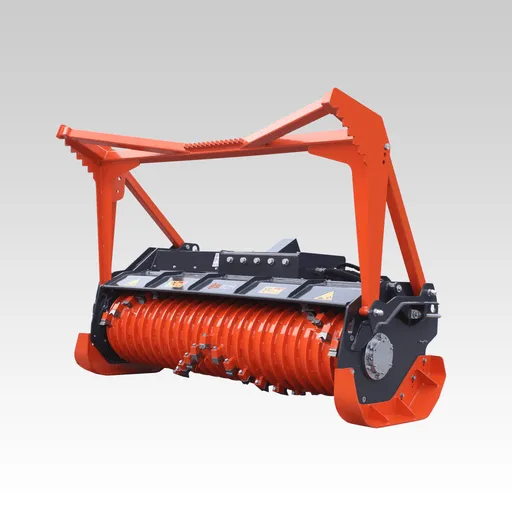
High flow is intended for tools that must keep a hydraulic motor spinning under sustained load. Forestry mulchers, cold planers, large rock saws and production brush cutters convert hydraulic power into continuous cutting work. When flow drops below the attachment’s minimum, rotor speed falls, material stops clearing efficiently and heat can build as the operator pushes harder to compensate.
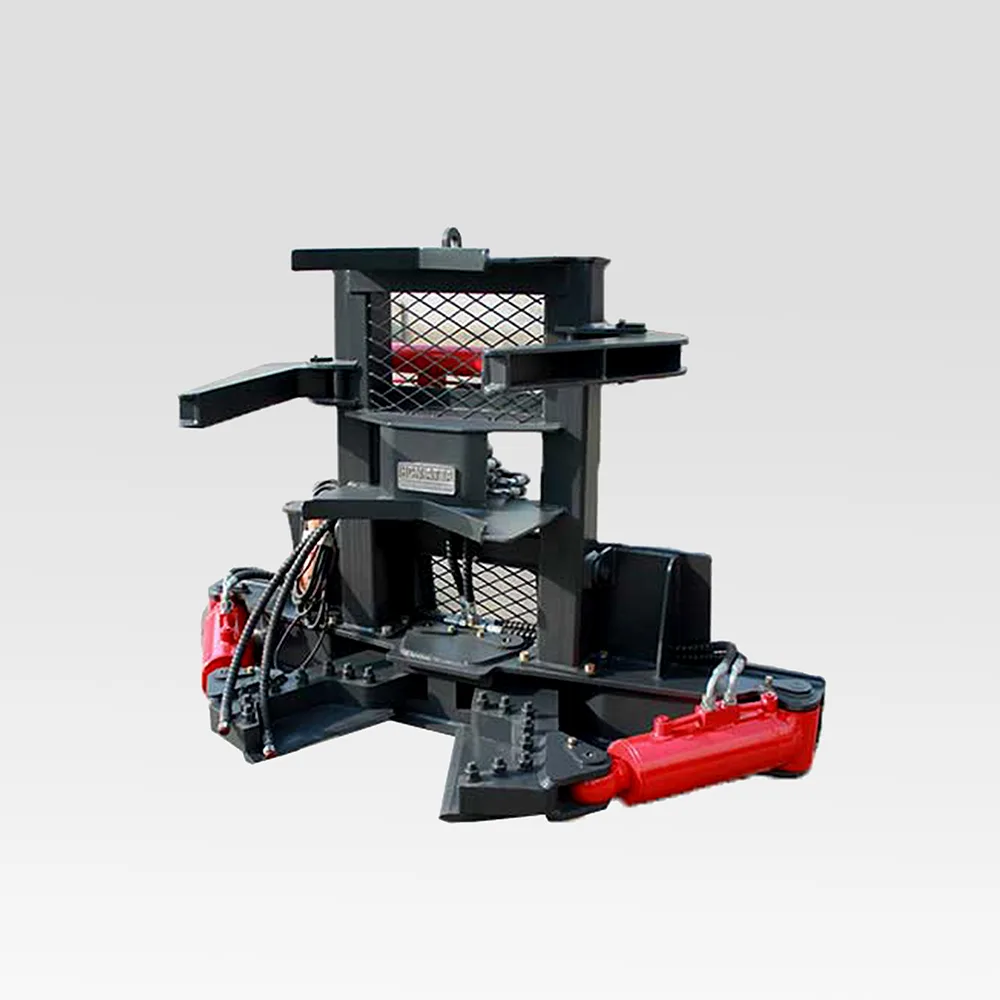
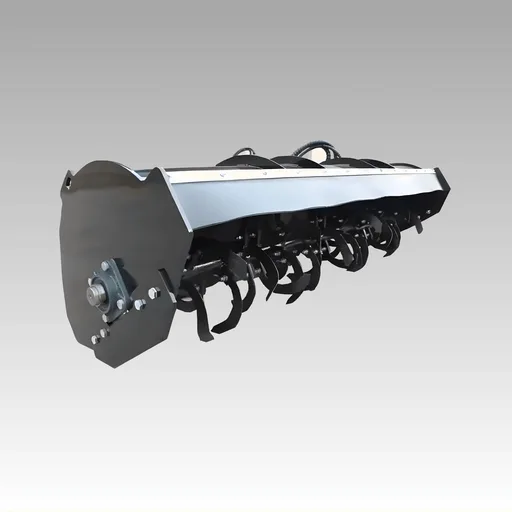
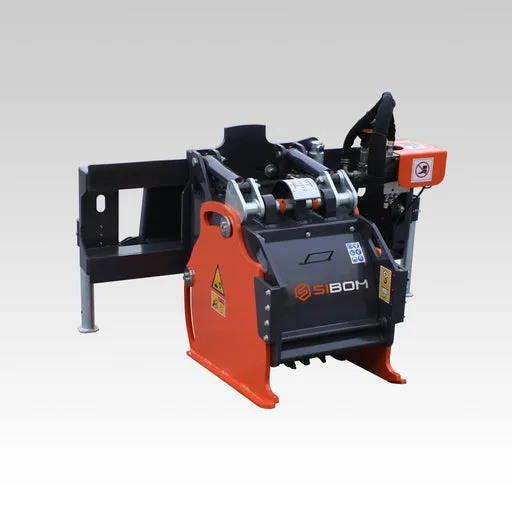
The Sibom forestry mulcher, for example, lists approximately 29.06–35.66 GPM (110–135 L/min) and a maximum pressure around 3,045 psi (210 bar). That flow window places it in high-flow territory for many skid steer models. The Sibom hydraulic cold planer spans a wider model-dependent range of about 21.1–52.8 GPM (80–200 L/min), so the selected planer configuration must be matched to the actual carrier rather than ordered by product name alone.
Which Skid Steer Attachments Usually Need High Flow?
The following guide reflects typical attachment behaviour, but the manufacturer’s model-specific flow range always takes priority.
- Buckets, pallet forks and bale spears: no continuous hydraulic motor; high flow normally provides no productivity advantage.
- Grapples, 4-in-1 buckets and hydraulic blades: cylinders operate intermittently; standard flow is normally sufficient when pressure and hose specifications match.
- Angle and pick-up brooms: many models run on standard flow, but wide production sweepers or specialised vacuum systems may require more oil volume.
- Hydraulic breakers: often matched by a relatively narrow flow and pressure range. More flow is not automatically better. The Sibom skid steer breaker, for example, lists about 6.6–11.9 GPM (25–45 L/min) depending on configuration.
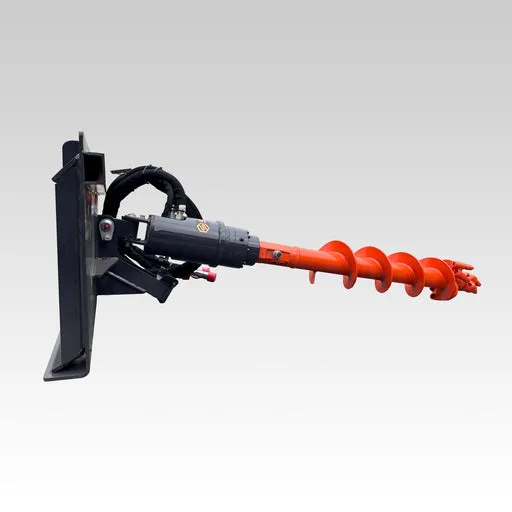
- Augers: smaller bits in workable ground may suit standard flow; large-diameter drilling and hard ground may need a higher-torque drive, not simply unrestricted extra flow.
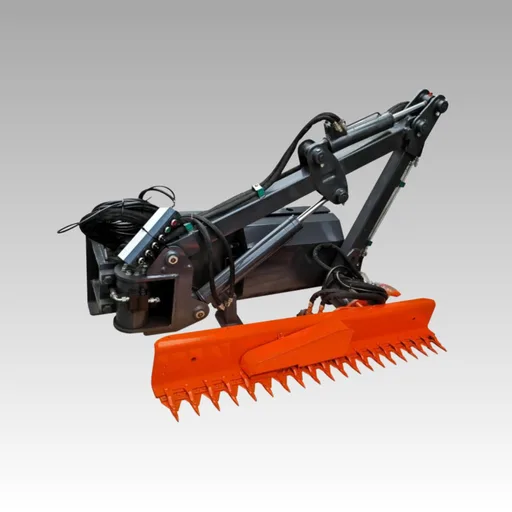
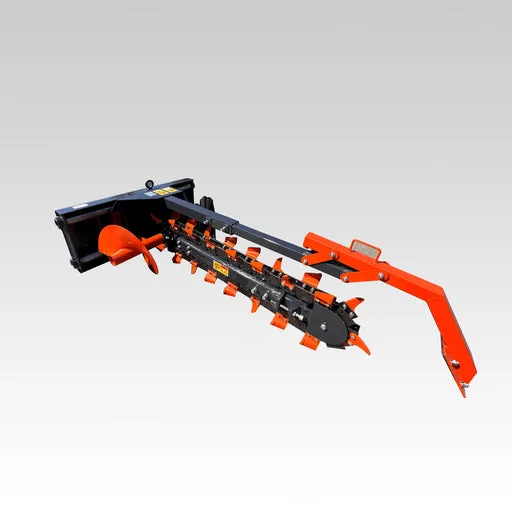
- Trenchers: model and soil conditions matter. Sibom’s skid steer trencher models list approximately 21.1–29.0 GPM (80–110 L/min), putting the deeper configuration near the upper end of many standard-flow systems.
- Forestry mulchers and heavy brush cutters: commonly high-flow applications because rotor speed must be maintained through dense vegetation.
- Cold planers and rock saws: frequently high flow, especially at larger cutting widths or depths where continuous hydraulic power drives production.
Why the Wrong Hydraulic Match Costs More Than Lost Speed
Undersupply usually appears as slow drum speed, weak material discharge, repeated stalling or poor cut quality. The operator may reduce travel speed and still complete the job, but output per hour can fall enough to erase the saving from buying a smaller or mismatched tool.
Oversupply is not a free performance upgrade. If machine output exceeds the attachment’s maximum-rated flow, the hydraulic motor can overspeed. Additional restriction creates heat, and excessive back pressure can damage motor seals. A high-flow carrier may run a lower-flow attachment only when the machine allows the auxiliary circuit to be selected or regulated to the attachment’s approved range.
Incorrect return plumbing causes a separate set of problems. Some motor-driven attachments require a low-pressure return directly to tank and/or a case drain line. Connecting only pressure and return hoses because the couplers physically fit can create damaging internal pressure. Confirm the number of hydraulic lines before dispatch—not when the attachment is already on site.
Australian Conditions That Affect the Decision
Australian buyers should assess the work cycle, not just the peak machine specification. A mulcher clearing dense regrowth for hours places a different thermal load on the hydraulic system from a broom used for ten minutes between loading tasks. Ambient heat, dusty work, blocked coolers and long continuous passes all reduce the margin for a poorly matched system.
Ground conditions also change demand. A trencher cutting soft prepared soil may operate comfortably near the lower end of its rated range, while compacted clay, gravelly fill or hard ground increases chain load. Similarly, a cold planer making shallow corrective passes is not the same duty as removing material continuously at maximum depth.
For councils, hire fleets and contractors moving between sites, attachment versatility can matter more than maximum output. A standard-flow tool that works across most of the fleet may produce better whole-of-business utilisation than a high-output attachment limited to one carrier. For dedicated vegetation, road maintenance or land-clearing crews, a correctly paired high-flow package can justify itself through higher hourly production.
Seven Checks Before Ordering a Hydraulic Attachment
- Machine make, model and serial number: model families can have optional hydraulic packages, so the badge alone may not identify actual output.
- Auxiliary flow in L/min: confirm standard and high-flow values from the machine specification or display settings.
- Auxiliary pressure in bar or psi: ensure machine pressure does not exceed the attachment’s maximum rating.
- Quick-hitch interface: hydraulic compatibility does not confirm mechanical fit. Provide hitch type, dimensions and clear photographs.
- Case drain and return requirements: confirm how many lines the attachment needs and whether the carrier has the correct ports.
- Rated operating capacity: check attachment mass plus material load against the carrier’s safe operating limits.
- Real application: describe material, cutting depth, ground conditions, daily operating hours and expected production—not just “construction” or “landscaping”.
A useful enquiry therefore reads: “Bobcat S650, 87 L/min standard auxiliary flow, 23.8 MPa, universal quick hitch, no case drain currently fitted, trenching 600 mm deep in mixed clay for irrigation.” That gives an attachment supplier enough information to rule models in or out before freight and lead time are discussed.
Should You Buy a High-Flow Skid Steer?
High flow is worth considering when a large share of billable work depends on a mulcher, planer, rock saw or another high-demand motor-driven attachment. It can also make sense for a hire fleet serving customers who already request these tools. If the machine mainly runs buckets, forks, grapples and occasional standard-flow implements, paying for high flow may not improve day-to-day productivity.
Plan the attachment lineup before selecting the carrier. List the tools that generate revenue, obtain their minimum and maximum hydraulic requirements, then choose a machine that supports the full set with appropriate cooling, plumbing and safe lifting capacity. Browse Sibom compact loaders and the complete attachment range to compare possible combinations.
Frequently Asked Questions
How do I know whether my skid steer is high flow?
Check the operator manual, machine data screen or serial-number-specific specification from the manufacturer. Look for auxiliary flow stated in L/min or GPM. Do not identify high flow from coupler size or decals alone.
Can I run a standard-flow attachment on a high-flow skid steer?
Only if the carrier can supply oil within the attachment’s stated flow and pressure range. Many high-flow machines have selectable standard-flow mode, but this must be confirmed for the exact model. Never send maximum high flow into a lower-rated motor.
Will a high-flow attachment work slowly on standard flow?
It may rotate, but that does not mean it is suitable. Running below the minimum-rated flow can cause poor cutting, stalling and heat, and may breach the manufacturer’s operating requirements. Match the published range instead of assuming reduced performance is safe.
Do hydraulic grapples need high flow?
Most grapples use hydraulic cylinders rather than a continuously rotating motor, so they generally do not need high flow. Correct pressure, controlled cylinder speed, hose routing and attachment/load capacity remain important.
What information does Sibom need to confirm compatibility?
Send machine make, model and serial number; auxiliary flow and pressure; hitch type; available hydraulic connections; intended material and duty cycle; plus photographs of the coupler and ports. Sibom can then check a standard model or discuss an OEM configuration.
Get the Flow Match Confirmed Before You Order
The best skid steer attachment is not the one with the highest flow rating. It is the one whose hydraulic, mechanical and weight requirements match your machine and the work you quote every week. Confirming those details early reduces commissioning problems, protects warranty conditions and gives Australian contractors a more reliable estimate of production.
For a compatibility review, use Contact Sibom Australia, call +61 401962909 or email rongl9823@gmail.com. Include your machine data and intended attachment so the team can compare flow, pressure, hitch and operating requirements before preparing a quote.