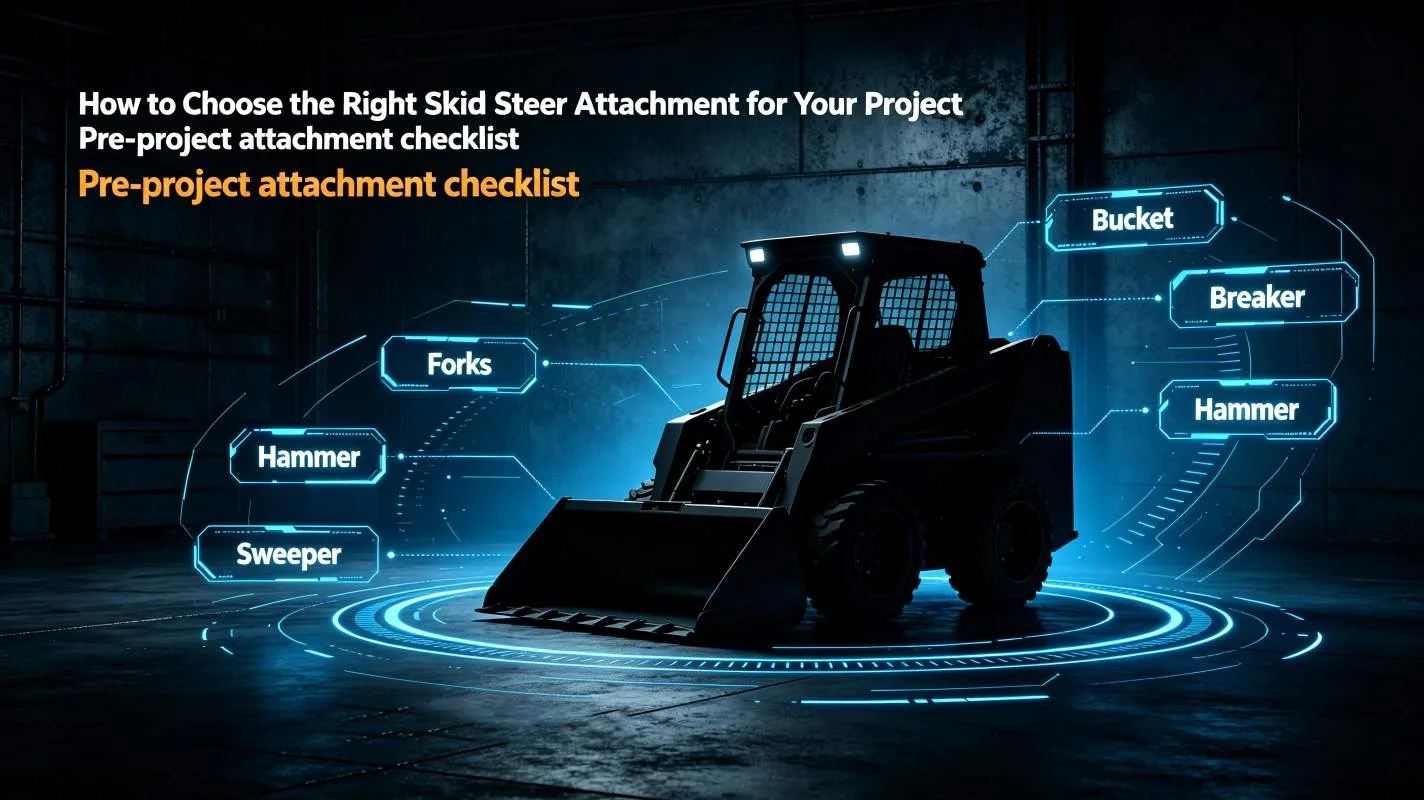
Skid steer loaders are among the most versatile machines on construction, landscaping and material handling sites. Their value, however, depends largely on the attachment fitted to the front of the loader. Choosing the wrong skid steer attachments can reduce productivity, increase wear and create safety risks — while the right tool can significantly improve cycle times and reduce operating costs.
This guide is written for contractors, fleet managers, rental operators and equipment dealers who need practical advice on selecting attachments for real job site conditions. Whether you are equipping a new machine or replacing worn tools, the same core factors apply: application, machine capacity, coupler compatibility and hydraulic requirements.
Understanding Skid Steer Attachments and Common Applications
Skid steer attachments are interchangeable tools mounted to the loader arms via a coupler system. They allow one compact machine to perform multiple tasks without requiring separate equipment for each job. The most common categories include buckets for loading and grading, forks for palletised materials, grapples for loose or irregular loads, and powered tools such as augers and brush cutters.
General Construction and Site Preparation
On general construction sites, skid steers are typically used for initial ground preparation, backfilling trenches, loading trucks and clearing debris. General-purpose buckets and grading buckets are the most frequently used attachments in this environment. For sites handling abrasive materials such as crushed rock or recycled aggregate, a heavy-duty bucket with reinforced cutting edges and thicker plate sections is often a better long-term investment than a light-duty standard bucket.
Material Handling and Loading
When the primary task is moving palletised goods, baled materials or stacked products, pallet forks or bale spears are more efficient than buckets. Forks provide stable support for uniform loads and reduce spillage compared to attempting the same task with a general-purpose bucket. For loose materials such as logs, scrap metal or demolition waste, a grapple attachment offers greater control and load retention.
Landscaping and Groundworks
Landscaping contractors often require a wider range of attachments across a single project — from soil preparation and trenching to vegetation management. Landscaping buckets, auger drives, soil conditioners and brush cutters each serve a distinct function. Compact access and frequent tool changes make quick coupler systems particularly valuable in this sector.
Key Factors When Selecting a Skid Steer Attachment
Before comparing attachment types, confirm that the tool is suitable for your specific machine and working conditions. The following factors should be reviewed for every purchase decision.
Machine Size and Lift Capacity
Every attachment has a weight that reduces the effective lifting capacity of the loader. Oversized or overweight attachments can limit safe working loads, increase tipping risk and place additional stress on hydraulic systems and structural components. Refer to your machine manufacturer's rated operating capacity (ROC) at 50% of tipping load, and ensure the combined weight of the attachment plus the intended payload remains within safe limits.
As a general reference:
Small-frame skid steers (typically under 1,750 kg operating capacity) suit light-duty buckets, small forks and compact augers.
Medium-frame machines handle standard construction buckets, medium grapples and most common hydraulic tools.
Large-frame skid steers support high-capacity buckets, heavy-duty grapples and demanding applications such as quarry loading or large-scale material handling.
Coupler Type and Mounting Compatibility
Attachment compatibility is determined by the coupler system on your loader arms. The three most common configurations are:
Pin-on mounting — direct connection using pin centres specific to the machine brand and model. Cost-effective and rigid, but slower to change.
Mechanical quick coupler — allows faster attachment changes without leaving the cab on some systems.
Hydraulic quick coupler — enables rapid tool changes from the operator station, ideal for fleets that switch attachments multiple times per day.
When ordering attachments, provide accurate pin centre dimensions, coupler model and wedge measurements. Even small dimensional differences can prevent proper fitment or cause excessive play in the connection.
Hydraulic Flow Requirements
Powered attachments — including augers, brush cutters, cold planers and some grapples — require a specific hydraulic flow rate (litres per minute) and pressure rating. Fitting a high-flow attachment to a standard-flow machine will result in poor performance. Conversely, running a standard-flow tool on a high-flow system without proper regulation can cause damage.
Check your machine's auxiliary hydraulic specification before ordering any powered attachment. If you are unsure, share your machine model and hydraulic data with your supplier during the quoting process.
Working Environment and Wear Conditions
Job site conditions directly affect attachment service life. Factors to consider include:
Abrasive materials (sand, gravel, crushed rock) — require hardened cutting edges and thicker wear plates.
Corrosive environments (marine, waste handling) — may require specific coating or material treatments.
Impact loading (demolition, rock handling) — demands reinforced shell structures and heavy-duty hinge points on grapples.
Operating hours — high-utilisation fleets benefit from premium wear packages that reduce replacement frequency.
Popular Skid Steer Attachment Types Explained
The following overview covers the most commonly specified skid steer attachments across construction and groundworks applications.
General Purpose and High-Capacity Buckets
General-purpose buckets are the default attachment for most skid steer operations. They are used for loading, carrying and levelling a wide range of materials. High-capacity buckets offer a larger volume for lighter materials such as mulch, snow or loose aggregate, improving productivity where material density allows.
Pallet Forks and Bale Spears
Pallet forks convert a skid steer into a compact forklift for yard and site material handling. Frame width and fork length should match typical load dimensions. Bale spears are designed specifically for handling round or square hay bales in agricultural and rural contracting applications.
Grapples and Brush Cutters
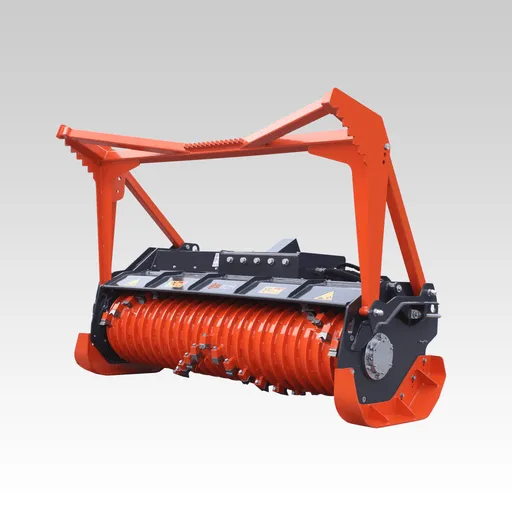
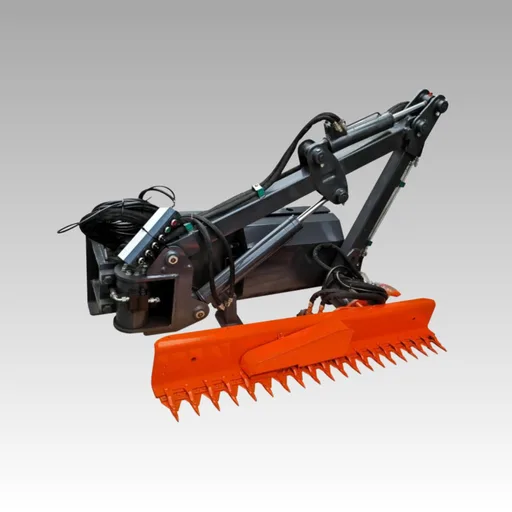
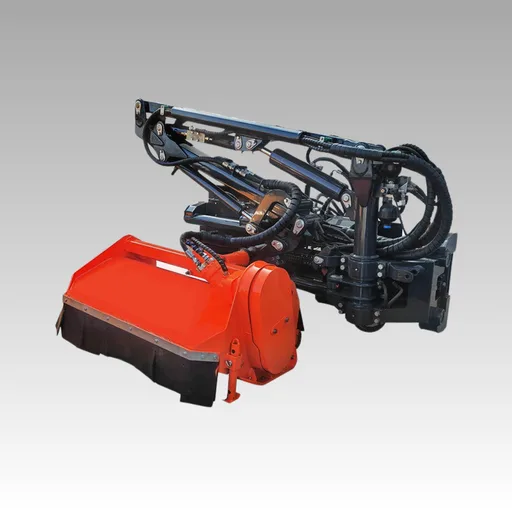
Grapples are essential for handling irregular loads — logs, brush, demolition debris and scrap. Root grapples and rock grapples differ in tine spacing and jaw design. Brush cutters and mulchers are hydraulic-powered tools used for vegetation clearing; they require careful matching to hydraulic flow and cutting width requirements.
Augers and Trenching Tools
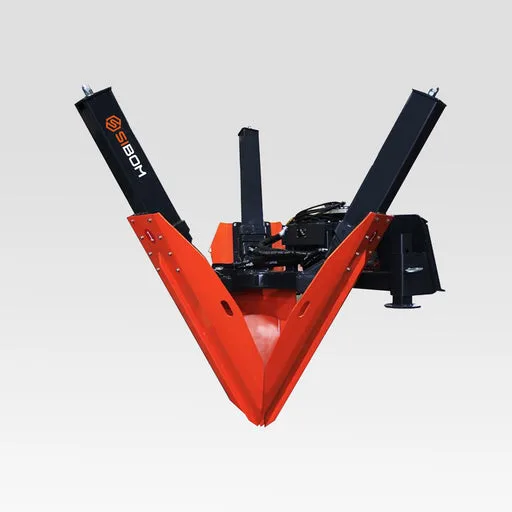
Auger drives are used for drilling post holes, planting and foundation work. Bit diameter and drive torque requirements vary by soil type. In rocky or clay-heavy conditions common across parts of Australia and New Zealand, a higher-torque drive unit and appropriate bit design are important for consistent performance.
To review attachments suited to your machine and application, view our skid steer attachment range.
Matching Attachments to Australian and New Zealand Job Sites
Contractors operating in Australia and New Zealand encounter a wide range of soil types, climate conditions and regulatory environments. Attachment selection should account for local factors rather than relying on generic specifications designed for other markets.
Soil and Terrain Considerations
Sandy soils common in coastal regions may require wider buckets for efficient loading, while rocky or laterite conditions in inland areas demand reinforced cutting edges and heavier-duty structures. In wet conditions, increased ground pressure from loaded attachments can affect site access — consider machine track type (wheeled vs tracked compact loader) alongside attachment weight.
Compliance and Site Safety Requirements
Workplace health and safety obligations in Australia and New Zealand require that all equipment, including attachments, is fit for purpose and maintained in safe working order. Before deploying new attachments on site, confirm that:
Load ratings are understood and not exceeded during operation.
Operators are trained on attachment-specific procedures.
Quick coupler systems are inspected regularly for wear and locking function.
Attachment identification and maintenance records are kept as part of fleet management.
New vs Replacement Attachments: What to Check Before Ordering
When replacing an existing attachment, do not assume that a previous supplier's dimensions will match all brands. Even within the same attachment category, pin centres, wedge angles and bucket profiles vary between manufacturers.
Pin Centres, Wedge Dimensions and Quick Coupler Standards
Provide your supplier with the machine brand, model, serial number (if available) and coupler type. Where possible, supply photographs and measurements of the existing mounting points. For quick coupler-equipped machines, confirm the coupler brand and model — attachments must be compatible with the coupler interface, not just the machine arms.
Lead Time and After-Sales Support
Lead times vary based on attachment type, customisation level and order volume. For fleet operators and dealers, confirm availability of wear parts — cutting edges, teeth, hoses and grapple pins — before placing bulk orders. Reliable after-sales support reduces downtime when wear components need replacement during active projects.
When to Consider OEM or Custom Skid Steer Attachments
Standard catalogue attachments suit most applications. However, you may need a custom or OEM-supplied solution when:
Your machine has non-standard coupler dimensions or a discontinued mounting system.
The application requires a specialised bucket profile, grapple jaw configuration or material specification.
You are a dealer or rental fleet building a branded attachment line for resale.
Standard attachments fail prematurely due to unusual site conditions or load types.
Working with an OEM manufacturing partner allows attachments to be engineered against your machine data and application requirements rather than adapted from a generic design. This approach is particularly relevant for dealers sourcing private-label attachments or contractors running equipment in consistently harsh environments.
Frequently Asked Questions
What is the most versatile skid steer attachment for general construction?
A general-purpose bucket is the most versatile single attachment for construction site work — handling loading, backfilling and light grading. Many contractors pair a GP bucket with pallet forks as a secondary tool for material handling tasks.
How do I know if an attachment is compatible with my skid steer coupler?
Confirm your machine's coupler type (pin-on, mechanical or hydraulic quick coupler), pin centre dimensions and wedge measurements. Share these details with your supplier before ordering. Compatibility should be verified against machine data, not estimated from visual comparison alone.
What hydraulic flow do I need for a skid steer grapple or auger?
Standard-flow machines typically deliver 60–80 L/min, while high-flow systems exceed 90 L/min. Check your machine's auxiliary hydraulic specification in the operator manual. Powered attachments are rated for a specific flow range — operating outside this range reduces performance or risks system damage.
Which skid steer attachments are best for landscaping work?
Landscaping projects commonly use combination buckets, auger drives, soil conditioners and brush cutters. The best combination depends on whether your primary work involves grading, planting, trenching or vegetation clearing. Many landscaping contractors use a quick coupler to switch between tools within the same project.
Should I buy standard or heavy-duty skid steer buckets for quarry work?
Quarry and aggregate applications involve abrasive materials and high-impact loading. Heavy-duty buckets with thicker plate, reinforced cutting edges and wear-resistant components typically deliver lower total cost of ownership in these conditions, despite a higher initial purchase price.
Can Sibom supply OEM skid steer attachments for dealers?
Yes. Sibom Industry manufactures skid steer attachments for dealers, rental fleets and OEM partners requiring bulk supply or custom specifications. Contact our engineering team with your machine data and volume requirements to discuss options.
Next Steps
Selecting the right skid steer attachment is a technical purchasing decision that affects safety, productivity and long-term operating cost. Start by defining your primary application, confirming machine specifications and reviewing attachment options against your site conditions.
If you would like assistance matching attachments to your machine model, request a specification review from the Sibom Industry team. We manufacture wheel loader, skid steer and excavator attachments for construction, agriculture and industrial applications, supplying customers across Australia, New Zealand and global markets.