


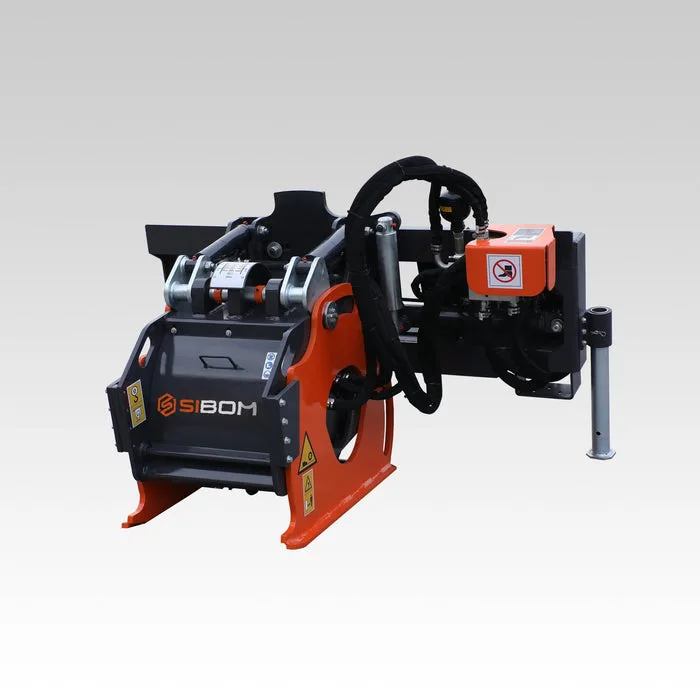
Efficient pavement maintenance requires more than simply removing damaged asphalt. Contractors need accurate cutting depth, controlled material removal and equipment that can work efficiently in confined areas. For road repairs, pavement rehabilitation and surface preparation, a skid steer asphalt planer can turn a versatile skid steer loader into a highly productive milling machine.
As demand for efficient road maintenance and infrastructure repair continues to grow, hydraulic cold planer attachments are becoming an increasingly practical option for contractors, civil construction companies, councils and maintenance crews. Compared with bringing a dedicated milling machine to every small repair job, a skid steer-mounted planer offers a compact and manoeuvrable solution for targeted pavement removal.
Sibom's range of hydraulic cold planers is designed for milling asphalt and concrete surfaces on roads, airports, freight yards and other demanding work sites. The attachment is engineered for high-flow skid steer loaders and combines adjustable milling depth, self-levelling capability, lateral movement and a compact working configuration.
What Is a Skid Steer Asphalt Planer?
A skid steer asphalt planer, also known as a cold planer, road milling attachment or pavement milling attachment, is a hydraulic attachment used to remove controlled layers of asphalt or concrete from an existing surface.
Instead of breaking pavement into large pieces with demolition tools, a cold planer uses a rotating milling drum equipped with cutting teeth to progressively remove the required layer. This allows operators to prepare surfaces for resurfacing, repair localised pavement damage and create controlled cuts where precision is important.
For contractors working with skid steer loaders, the main advantage is flexibility. One carrier machine can be used with multiple attachments for different stages of a project, while the cold planer provides specialised milling capability when pavement needs to be removed or prepared.
Why Use a Cold Planer Attachment for Road Repairs?
Road maintenance projects are rarely identical. Some jobs require only a narrow section of damaged asphalt to be removed, while others involve larger areas of pavement rehabilitation. A dedicated road milling machine may not always be practical for smaller or restricted-access projects.
A skid steer cold planer attachment provides a useful middle ground between handheld equipment and large dedicated milling machines.
Precise material removal: Adjustable cutting depth allows operators to remove the required pavement layer rather than unnecessarily disturbing the surrounding surface.
Compact working footprint: A skid steer can manoeuvre through areas where larger road milling equipment may be difficult to position.
Versatile applications: The same attachment can be used for asphalt, concrete and pavement preparation applications, depending on the selected configuration.
Hydraulic operation: The planer uses the carrier's hydraulic system to power the milling drum.
Improved job flexibility: Contractors can use an existing skid steer loader for multiple construction and maintenance tasks.
Key Features That Matter in a Skid Steer Planer
1. Self-Levelling for Consistent Milling
Maintaining a consistent cutting depth can be challenging when working across uneven pavement. The self-levelling system on the Sibom cold planer is designed to help maintain a controlled milling depth relative to the ground surface.
This feature is particularly useful when preparing pavement for resurfacing because inconsistent milling can create additional work during the following stages of a project.
2. Adjustable Milling Depth
Different road repair applications require different cutting depths. A shallow cut may be suitable for removing surface defects or preparing an area for an overlay, while deeper milling may be required when deteriorated pavement extends further into the existing surface.
The Sibom range provides milling depths from 0 to 6.7 inches, depending on the model. This gives contractors greater flexibility when choosing equipment for different pavement rehabilitation requirements.
3. Lateral Shift for Working Along Edges
Access around kerbs, gutters and other pavement boundaries can be difficult with fixed-position attachments. The lateral shift function allows the planer to move sideways, helping operators work closer to edges without constantly repositioning the carrier.
For road maintenance contractors, this can be particularly useful when completing localised repairs or milling narrow sections alongside existing infrastructure.
4. Tilt Adjustment for Uneven Surfaces
The planer is designed with an inclination range of ±8 degrees. This allows the attachment to adapt to changing ground conditions and supports controlled milling where the pavement is not perfectly level.
Combined with the self-levelling system, the tilt function helps improve control when working across irregular pavement surfaces.
5. Multiple Working Widths
Choosing the correct milling width is important because the attachment should match both the carrier machine and the type of work being performed.
The Sibom range includes four configurations with milling widths of approximately 11.8, 17.7, 23.6 and 39.4 inches. The range therefore covers narrow repair work through to wider pavement milling applications.
Common Applications for a Skid Steer Road Milling Attachment
A hydraulic road milling attachment can be used across a broad range of civil construction and pavement maintenance applications.
Asphalt Road Repairs
Damaged sections of asphalt can be milled to a controlled depth before new material is installed. This approach can help create a more consistent repair area and improve preparation for resurfacing.
Pothole and Localised Pavement Repair
Instead of removing an unnecessarily large area of pavement, contractors can use a cold planer to mill a defined section around damaged pavement before completing the repair.
Road Resurfacing Preparation
Before a new asphalt layer is applied, existing pavement may need to be milled to achieve the required level and surface profile. A cold planer provides controlled material removal for this type of preparation work.
Concrete Surface Milling
Depending on the selected blade and operating configuration, cold planer attachments can also be used for concrete milling applications. This can make the attachment useful for contractors working across both asphalt and concrete projects.
Utility and Trenching Work
Controlled pavement cutting can be useful when utility contractors need to open sections of asphalt or concrete for infrastructure installation and repair. A skid steer planer can provide an alternative to less controlled pavement-breaking methods in suitable applications.
Airport and Freight Yard Maintenance
Large paved areas such as freight yards, industrial facilities and airport surfaces can require localised maintenance. A manoeuvrable skid steer-mounted planer can provide access to areas where a larger milling machine may not be the most practical option.
Why High-Flow Hydraulics Matter
One of the most important considerations when choosing a cold planer is the hydraulic capability of the carrier machine.
Sibom's cold planer range is designed for skid steer loaders equipped with high-flow hydraulic output. Depending on the model, the required working flow ranges from approximately 21.1 to 52.8 gallons per minute, with a maximum allowable pressure of approximately 3,045 psi.
Before purchasing or hiring a cold planer attachment, operators should always check the skid steer's hydraulic flow, pressure, auxiliary circuit specifications, quick couplers and electrical requirements.
Using an attachment that is properly matched to the carrier helps ensure that the milling drum can operate effectively and that the hydraulic system remains within its intended operating range.
Sibom Cold Planer Specifications at a Glance
| Model | Milling Width | Maximum Milling Depth | Maximum Lateral Shift | Hydraulic Flow |
|---|---|---|---|---|
| SCP12I | 11.8 in | 4.3 in | 20.1 in | 21.1–29.0 GPM |
| SCP18I | 17.7 in | 6.7 in | 20.1 in | 31.7–39.6 GPM |
| SCP24I | 23.6 in | 6.7 in | 20.1 in | 31.7–44.9 GPM |
| SCP40I | 39.4 in | 5.1 in | 16.5 in | 31.7–52.8 GPM |
All four configurations provide an inclination range of ±8 degrees and are designed for skid steer loaders with suitable high-flow hydraulic output. The attachment is also available with optional asphalt or concrete blades and a spray system.
How to Choose the Right Skid Steer Cold Planer
Choosing a cold planer should start with the carrier machine rather than the attachment alone.
Check Hydraulic Flow and Pressure
Confirm the skid steer's auxiliary hydraulic flow and pressure before selecting a model. High-flow compatibility is especially important for hydraulic milling equipment.
Match the Milling Width to the Job
Narrower milling widths can be advantageous for targeted repairs, trench preparation and confined areas. Wider drums can increase productivity when removing larger sections of pavement.
Consider Required Cutting Depth
Think about the typical pavement thickness and repair requirements on your projects. If deeper milling is regularly required, select a model that provides sufficient cutting depth without exceeding the capabilities of the carrier.
Consider Access and Manoeuvrability
One of the key advantages of a skid steer planer is the ability to work in areas where larger equipment may struggle. Consider kerbs, gutters, narrow access points, industrial yards and other site restrictions when selecting the attachment configuration.
Look at Wear Parts and Maintenance
Milling is an abrasive application. Cutting teeth and other wear components should therefore be inspected regularly. Easy access to replaceable components can help reduce maintenance downtime and keep equipment productive.
Cold Planer vs Other Pavement Removal Methods
Different pavement removal methods have different strengths.
Jackhammers and breakers can be useful for demolition and breaking hard materials, but they may provide less consistent control when a specific pavement thickness needs to be removed.
A dedicated road milling machine can provide high productivity on large projects, but transporting and operating larger equipment may not be economical for every smaller repair.
A skid steer asphalt planer offers a practical option for contractors who need controlled pavement milling while retaining the manoeuvrability and attachment flexibility of a skid steer loader.
Improving Productivity on Australian Roadwork Projects
For Australian contractors, equipment productivity is closely linked to transport requirements, site access, labour efficiency and machine utilisation. A versatile skid steer loader can already perform numerous tasks when equipped with the appropriate attachments.
Adding a cold planer can expand the machine's capabilities into pavement maintenance and road construction applications without requiring a separate dedicated milling machine for every project.
This can be particularly valuable for contractors handling local road repairs, commercial pavement maintenance, civil construction, utility work, car parks and industrial sites.
What Makes a Skid Steer Planer a Practical Attachment?
The strongest advantage of a skid steer cold planer is versatility. Rather than purchasing equipment designed for only one large-scale application, contractors can use an existing high-flow skid steer as the carrier and change attachments according to the job.
For businesses managing a mixed workload, this can make equipment utilisation more efficient. The same skid steer can potentially be used for earthmoving, grading, sweeping, material handling and pavement milling depending on the available attachment range.
The compact format also makes a skid steer-mounted planer particularly useful where access, positioning and transportability are important considerations.
Frequently Asked Questions
What is a skid steer cold planer used for?
A skid steer cold planer is primarily used to mill and remove controlled layers of asphalt or concrete. Common applications include road repairs, pavement rehabilitation, resurfacing preparation, pothole repair, utility work and surface correction.
Can a cold planer mill asphalt?
Yes. A cold planer is specifically designed for controlled asphalt milling. The Sibom range is designed for asphalt and concrete milling applications, with optional blade configurations available for different materials.
Can a skid steer cold planer mill concrete?
Yes, depending on the attachment configuration and selected cutting tools. Sibom offers optional asphalt and concrete blade configurations for its cold planer range.
What hydraulic flow does a skid steer cold planer require?
The required hydraulic flow depends on the selected model. Sibom's range operates from approximately 21.1 to 52.8 GPM, so the carrier machine should be checked carefully before selecting a model.
Does a cold planer require a high-flow skid steer?
Yes. Sibom's cold planer is designed for skid steer loaders equipped with suitable high-flow hydraulic output. Always verify the carrier's hydraulic specifications before operation.
How deep can a skid steer planer cut?
Depending on the model, the Sibom cold planer provides a maximum milling depth ranging from approximately 4.3 to 6.7 inches.
What milling widths are available?
The range includes milling widths of approximately 11.8, 17.7, 23.6 and 39.4 inches, allowing contractors to select a configuration based on the scale and type of pavement work.
Is a cold planer suitable for pothole repairs?
Yes. Cold planers can be used for localised pavement removal and repair preparation. The controlled cutting action can help create a defined repair area before new pavement material is installed.
What should I check before buying a skid steer asphalt planer?
Check hydraulic flow and pressure, carrier compatibility, required milling width, maximum cutting depth, attachment weight, electrical requirements, quick coupler compatibility and the type of pavement you intend to mill.
Final Thoughts
A well-designed skid steer asphalt planer can provide contractors with a practical and versatile solution for pavement milling, road maintenance and surface preparation. By combining hydraulic milling power with adjustable depth, self-levelling capability, lateral movement and multiple working widths, a cold planer can handle a wide range of targeted roadwork applications.
For contractors looking for a skid steer cold planer, asphalt milling attachment or road milling attachment, selecting the right configuration is essential. The carrier's hydraulic performance, required milling width, cutting depth and typical job conditions should all be considered before purchasing.
Sibom's 0206 Series Cold Planer range provides four configurations for high-flow skid steer loaders, giving contractors flexibility across narrow repair work, pavement rehabilitation and wider milling applications.
For detailed specifications, compatibility information and attachment requirements, visit the Sibom Cold Planer product page or contact the Sibom team for application and equipment advice.
Related search terms: skid steer asphalt planer, skid steer cold planer, asphalt milling attachment, road milling attachment, pavement milling attachment, skid steer road planer, asphalt planer attachment, concrete milling attachment, road repair equipment, high flow skid steer attachment.