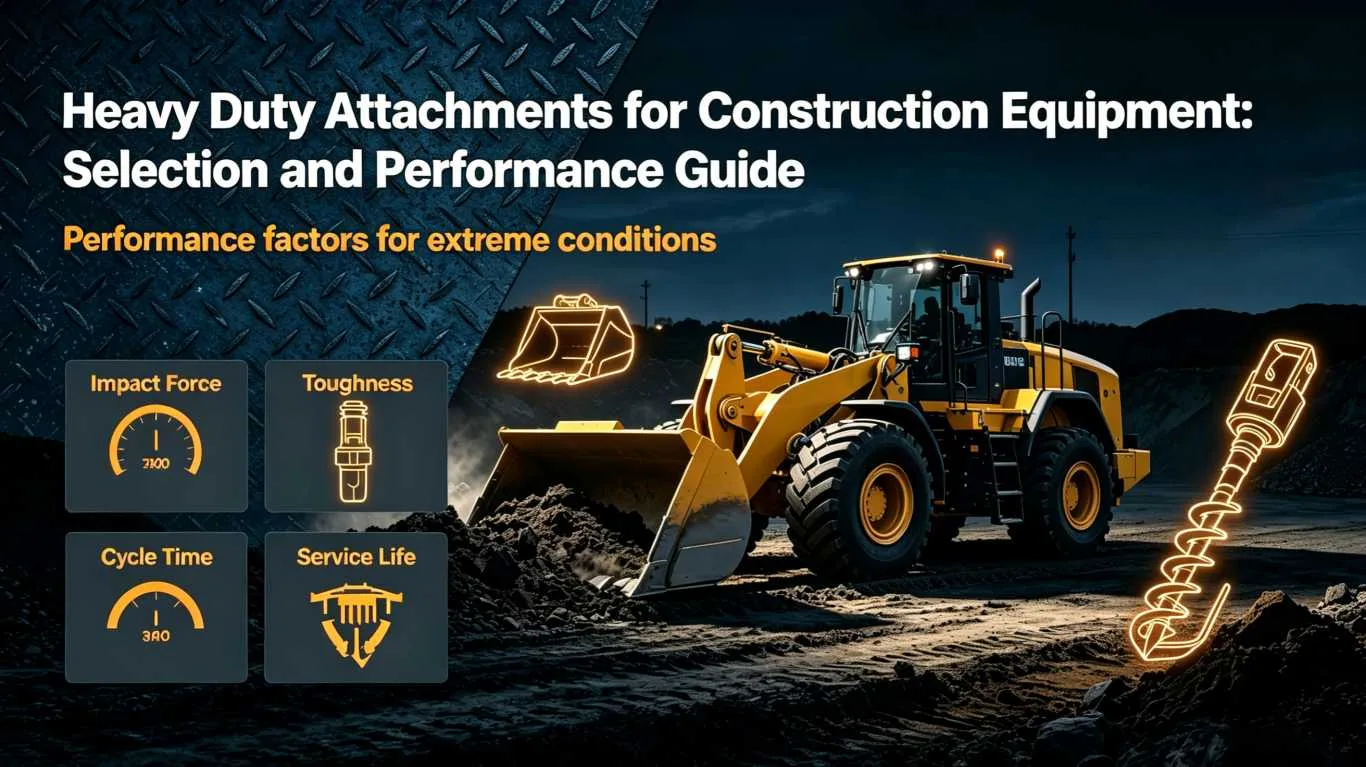
Standard attachments perform well in general loading and material handling. On quarry faces, demolition sites and bulk material operations, they wear quickly, structurally fatigue and require frequent replacement. Heavy duty attachments are engineered for these conditions — with thicker plate, reinforced structures and upgraded wear components that deliver longer service life and lower total cost of ownership.
This guide explains what defines a heavy duty attachment, how to match specifications to your application, and what procurement teams should evaluate when sourcing from a specialist manufacturer.
What Makes an Attachment "Heavy Duty"?
"Heavy duty" is not a regulated standard — it describes attachments built above standard specifications for structural strength, wear resistance and impact tolerance. Understanding the specific upgrades involved helps buyers compare products on a like-for-like basis.
Steel Grade and Plate Thickness
Heavy duty attachments use higher-grade structural steel and increased plate thickness in the shell, base plate and side walls. Typical upgrades move from 8–10 mm standard plate to 12–16 mm or greater in high-wear zones. Material grade selection (e.g. Q345B, Hardox or equivalent wear plate in critical areas) affects both structural integrity and abrasion resistance.
Reinforced Structures and Wear Packages
Additional gussets, reinforced hinge bosses, protected hydraulic cylinder mounts and full-wrap heel blocks are common structural upgrades. Wear packages include replaceable wear strips on the bucket heel, side cutter bars and internal liner plates in high-abrasion zones.
Cutting Edge and Tooth Systems
Standard bolt-on cutting edges suit general fill work. Heavy duty applications use hardened edges, chisel or penetration-style teeth and segmented edge systems that allow partial replacement without removing the full edge assembly. Tooth systems are particularly important for rock loading and demolition handling where impact loading is continuous.
Heavy Duty Attachments by Equipment Type
Heavy duty requirements differ across machine platforms. The following overview covers the most common upgrade paths.
Wheel Loader Heavy Duty Buckets and Forks
Rock buckets for wheel loaders feature reinforced shell plates, heavy base sections and upgraded cutting edge systems. For aggregate and quarry loading, bucket capacity should be balanced against structural weight — an oversized heavy duty bucket can reduce effective payload on mid-size loaders. Heavy duty fork frames are specified for block handling, concrete products and dense palletised loads.
Skid Steer Reinforced Buckets and Grapples
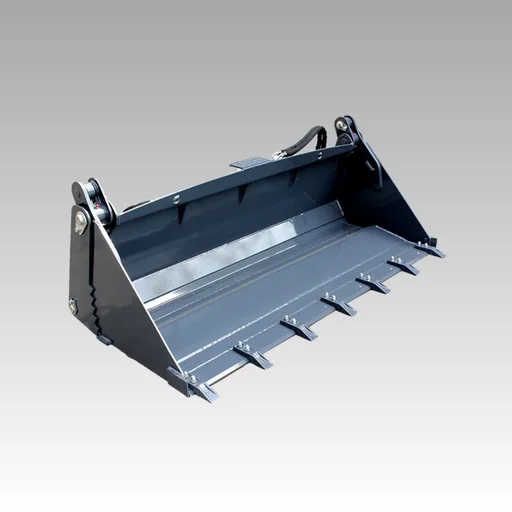
Compact loaders working in demolition, recycling and landscape clearing benefit from reinforced bucket shells and grapple frames with hardened tine tips. Given the lower operating capacity of skid steers relative to wheel loaders, heavy duty upgrades must be carefully weighted to preserve safe payload margins.
Excavator Rock Buckets and Breaker Mounts
Excavator rock buckets require precise pin and hanger dimensional control alongside heavy structural specification. Breaker mounts and rippers for excavators are subject to high vibration and impact loads — weld quality and plate grade in the mounting bracket are critical safety factors.
Browse construction equipment attachments by machine type and duty classification to compare standard and heavy duty options.
Matching Heavy Duty Attachments to Application
Specifying heavy duty without matching to the actual application leads to unnecessary cost. Match the duty level to the most demanding routine condition — not occasional peak loads.
Quarry and Aggregate Loading
Primary loading of blasted rock and crushed aggregate demands heavy duty rock buckets with tooth systems and hardened edges. Key metrics: edge replacement interval, shell plate wear rate and structural inspection frequency. In active quarry operations, a heavy duty bucket typically pays back its premium within one to two edge replacement cycles compared to a standard bucket.
Demolition and Concrete Handling
Demolition sites expose attachments to impact loads, rebar contact and mixed material abrasion. Grapples with reinforced jaws and heavy duty buckets with full-wrap heel blocks outperform standard tools in these conditions. Inspect hinge pins and grapple cylinder mounts at shorter intervals than general construction applications.
Mining and Bulk Material Operations
Mining and bulk handling require the highest duty classification — maximum plate thickness, wear plate in all contact zones and heavy tooth or edge systems. These attachments are typically custom-specified against machine data and site material analysis rather than selected from standard catalogue options.
Performance Metrics Buyers Should Compare
Comparing heavy duty attachments on purchase price alone misses the operational economics that matter over a 12–24 month period.
Service Life and Maintenance Intervals
Track cutting edge life (hours between replacement), tooth consumption rate and structural inspection findings. A bucket costing 30% more upfront but delivering twice the edge life and 50% fewer structural repairs represents better value for high-utilisation operations.
Load Capacity and Structural Safety Factors
Heavy duty attachments are heavier than standard equivalents. Confirm that the attachment weight plus maximum payload remains within the machine's rated operating capacity at the working lift height. Overloading compromises stability and accelerates wear on loader arms, pins and coupler mechanisms.
Total Cost of Ownership
TCO calculation should include: purchase price, edge and tooth replacement costs over 2,000 operating hours, downtime for replacement and installation, and any structural repair costs. Request TCO data from suppliers who have field experience in your application category.
Heavy Duty vs Standard Attachments: Cost and ROI Analysis
The decision framework is straightforward:
Choose standard when loading low-abrasion materials, operating fewer than 500 hours per year on the attachment, or working in conditions with minimal impact loading.
Choose heavy duty when loading abrasive or impact-loaded materials, operating more than 1,000 hours per year, or when downtime for edge replacement disrupts production schedules.
Consider custom heavy duty when standard heavy duty catalogue options do not match your machine coupler, bucket geometry or material requirements.
For operations consistently exceeding standard duty limits, a custom heavy duty specification from an experienced manufacturer often delivers the best long-term ROI.
Sourcing Heavy Duty Attachments from a Specialist Manufacturer
Heavy duty attachments require manufacturing processes that standard fabrication shops may not consistently deliver — controlled welding procedures, material traceability and dimensional accuracy on large weldments.
Evaluate suppliers on:
Experience producing heavy duty attachments for your machine type and application.
Material sourcing and certificate provision for structural and wear plate.
Weld procedure qualifications for heavy plate fabrication.
Field performance data or customer references in similar applications.
Review Sibom engineering and fabrication capabilities for heavy duty attachment projects.
Frequently Asked Questions
When should I choose a heavy duty bucket over a standard bucket?
Choose heavy duty when routinely handling abrasive materials (aggregate, rock, recycled concrete), operating in high-utilisation cycles (1,000+ hours per year), or when standard buckets require edge replacement more than twice per year in your operation.
What steel grades are commonly used in heavy duty attachments?
Structural components typically use Q345B or equivalent high-strength low-alloy steel. High-wear zones may incorporate Hardox 400/450 or equivalent abrasion-resistant plate. Material selection should be confirmed with the manufacturer against your specific application.
How can I extend the service life of a heavy duty grapple?
Regular inspection of hinge pins, bushing wear and tine tip condition is essential. Operate within rated load limits, avoid side-loading the jaws beyond design parameters, and replace wear components before they compromise structural elements.
Are heavy duty attachments compatible with quick couplers?
Yes. Heavy duty attachments are available for pin-on, mechanical and hydraulic quick coupler systems. The additional weight of heavy duty construction makes correct coupler rating and locking mechanism inspection especially important.
What information do I need to provide for a heavy duty attachment quote?
Machine brand, model, coupler type, pin centre dimensions, primary material type, estimated annual operating hours and any existing attachment drawings or samples. Send your machine details for a specification recommendation.
Can heavy duty attachments be customised for specific machine models?
Yes. Custom heavy duty attachments are engineered against supplied machine data and application requirements. This is the recommended approach for non-standard coupler systems, unusual bucket geometries or extreme duty applications.
Next Steps
Heavy duty attachments are an operational investment, not a commodity purchase. Define your application duty level, calculate TCO against standard alternatives, and source from a manufacturer with demonstrated experience in your machine and material category.
Request a heavy duty attachment specification from Sibom Industry for wheel loaders, skid steers and excavators.